

Dior, Decoded
An Introduction to House Codes Through the World of Dior

Welcome or welcome back to Gatekept Essays! There are lots of new readers here, so I’m particularly excited to have you here to read this edition of my weekly series. We’ll get into the beauty of Dior in a moment, but I’ve created a fancy little poll to learn more about what you’d like to see on Gatekept:

What are House Codes?
As divisive as the term house codes seem to be, at large they are simply brand guidelines rooted in heritage. If you’ve ever worked in a creative field, you’re probably familiar with “brand guidelines”. Brand guidelines are sort of like an…adjacent term of house codes. They’re in the same orbit, at least. Brand guidelines are a fabulous tool. For example, you might reference them when creating social media assets, checking to see what colors and fonts to use–and if it’s the right time to use them. But a couple major differences: branding is rigid but can be rebranded eventually, house codes are more flexible in practice but shouldn’t die.
Think of these big luxury fashion houses like entities, with moral belief systems and lines of personal logic. You can see these codes span across designers, tying them all together despite their difference in brand interpretation. Ideally, a house code helps maintain continuity, the creative director staves off stagnation.
What House Codes are not…
Ah, you thought it was that simple? First day on earth? Idealist indeed, the reality is that people debate the varying degrees of house codes pretty much endlessly. People love a great divide. It’s largely split between purists and visionaries, traditionalists and progressives, the old and young. At this time, I’m something of a centrist, which is not something I find myself often saying. I see the value in giving designers a path to innovative design without constraint, but I also hold a deep respect for referencing the past. The big issue is, who is the arbiter of respect? What is a respectful way to reference the past? How should a designer in 2026 interpret a revolutionary design from the 1940s as relevant today? I will save that for another essay, perhaps closer to fashion week season (closing in fast!) but I’d like you to consider the answer for yourself.
For a luxury house–especially one that carries so much legacy in the original designer–a house code doesn’t describe when you use something, but in what essence.
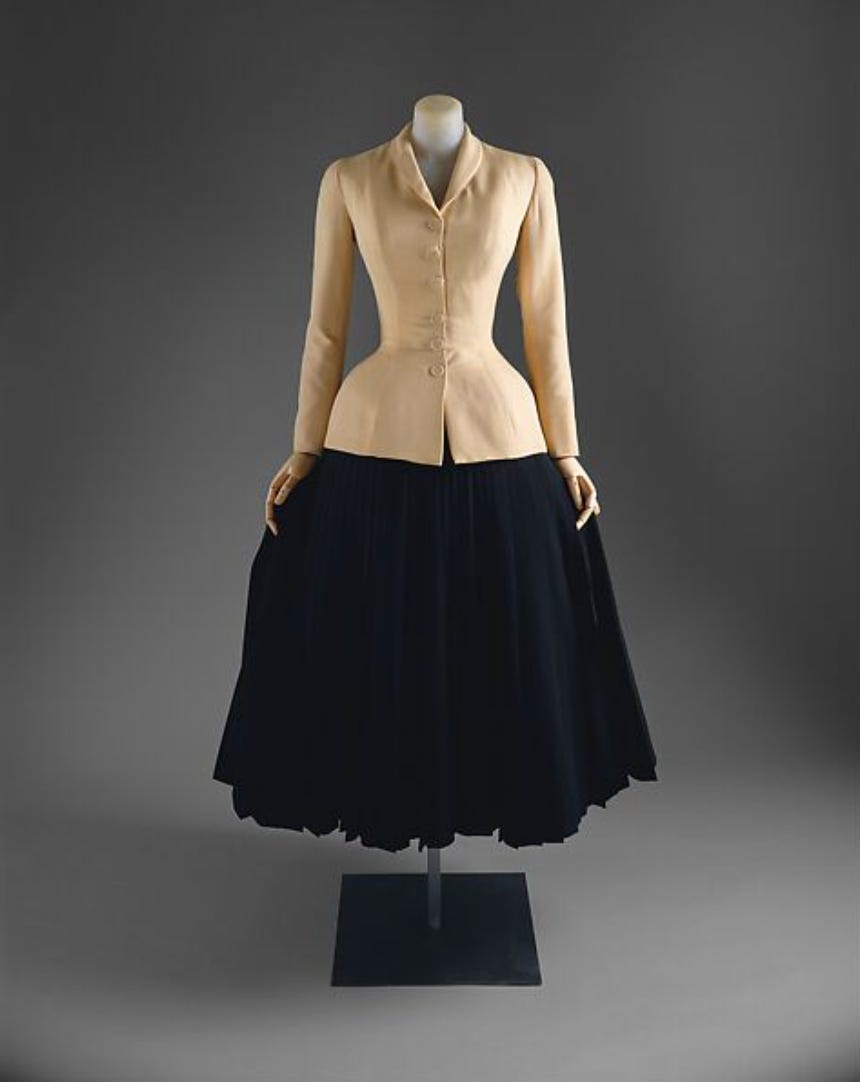
For example, Christian Dior introduced nipped-in waistlines with voluminous skirts in his 1947 debut collection as part of what became known as the New Look, a silhouette that sharply contrasted with wartime rationing and embodied a controlled, constructed femininity. You can trace that legacy in different ways across successive creative directors that followed after Dior’s death in 1957; from Yves Saint Laurent to John Galliano to current day’s Jonathan Anderson. If tailored waistlines = X and order = Y, then X + Y = Dior. But X does not equal Dior, because without the Y, you’ve lost the meaning. From a business perspective, it’s each individual creative director’s job to execute that value system while still keeping the designs moving forward for a new audience. I am not a fashion designer myself, but I imagine this to be as frustrating as an artist realizing that blue paintings sell the best when their favorite color is green. Overdone, one could argue…and rent remains due.
For the rest of the essay, we’ll be taking a look at the House of Dior’s House Codes. In the syllabus, I’ll give you a framework for deciphering luxury house codes yourself, which is perfect practice ahead of fashion week. I’m interested to hear what you think about house codes, so please feel free to chime in via the Gatekept chat.

A Brief History of Dior - The Man & The Brand
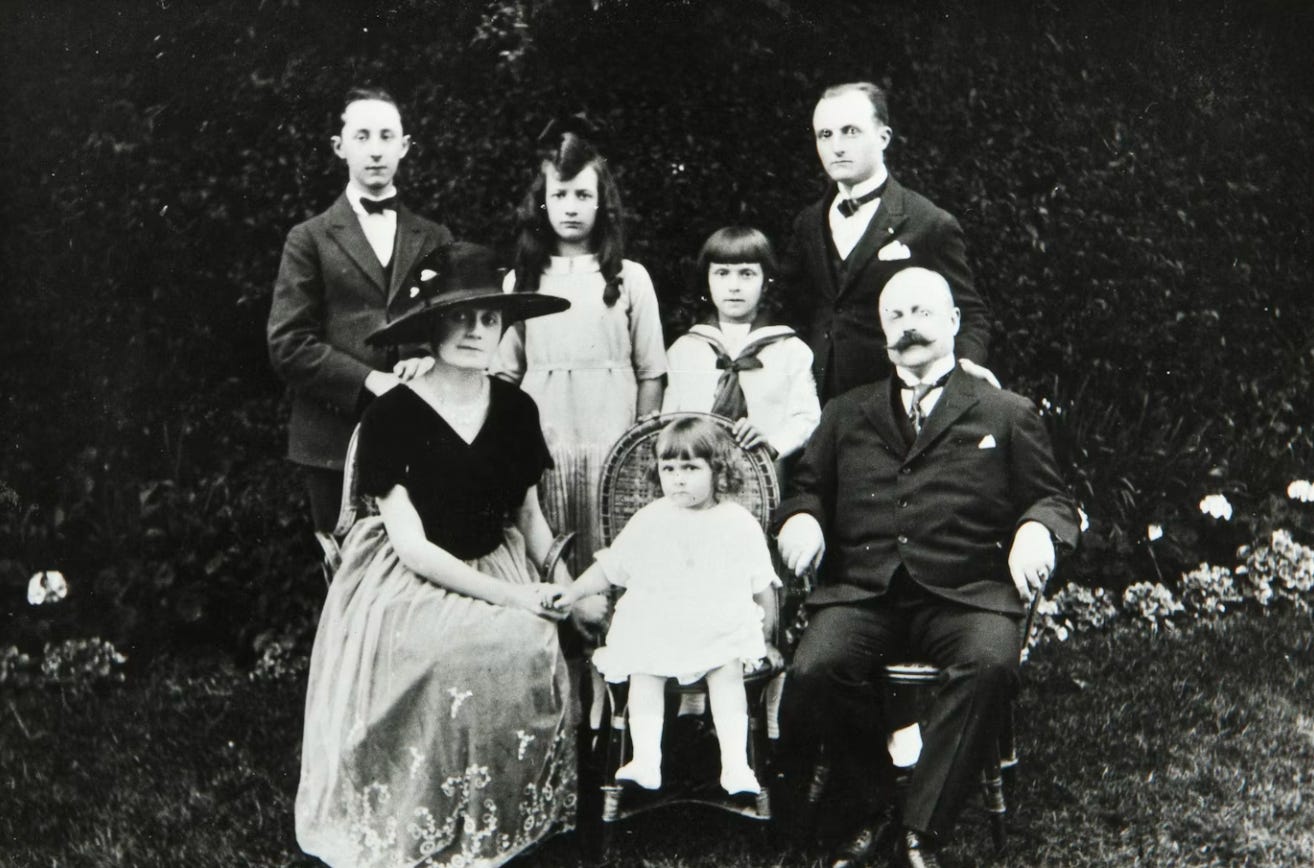
Christian Ernest Dior was born on January 21st in 1905, into a wealthy family flush from his father’s work in the fertilizer trade. His mother, Madeleine, kept a beautiful garden, which she kept shielded from the harsh Normandy seaside winds. Wealthy due to their fertilizer business, the Dior family moved from the seaside of Normandy to Paris when Christian was five years old. They fled World War I in 1914, back again to their seaside respite, which had been maintained as a holiday house.
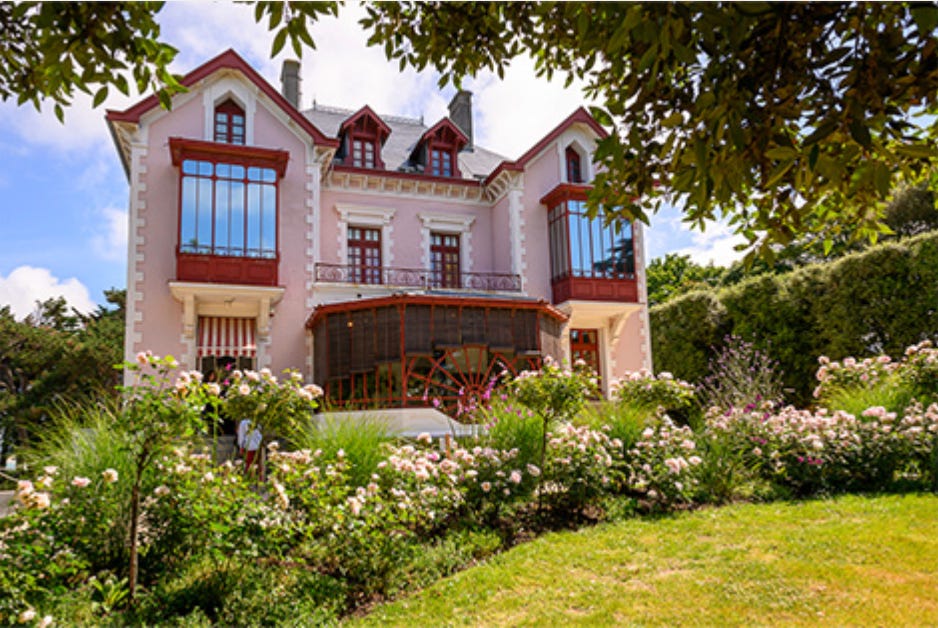
Madeleine continued to keep what is referred to as one of the few “artistic gardens” to be so well preserved, bonding with Christian over the unique design features made to shield the delicate flowers. Now, the Granville house is Musée Christian Dior, a love letter to Dior’s early years. Dior once said of the house, “it was pebbledashed in a very soft pink, blended with gray gravel, and these two colors have remained my favorite shades in couture.” After four years of living on the Granville cliffside and occupying their time assisting war efforts, they moved back to Paris, not far from their original apartment. Christian’s mother died in 1930, when he was 25 years old. A friend of his described Madeleine as “...elegant and slender woman, sometimes distant, always graceful.”

I emphasize Dior’s relationship to his mother in particular, because the impression she made shows up so often in his designs – perhaps the Y in our equation.
Abandoning a political science degree in 1928, Dior started a small art gallery, financed by his father, who had wanted him to be a diplomat. He rubbed elbows with some of history’s greatest artists and explored the creative environment that would later shape his work. Still, the Great Depression spared no one and after a three year run, Dior was out of the gallery business and selling fashion sketches for an incredible 10 cents–$2.36 by today’s standards. A good reminder to occasionally stop and buy art from people you’ve never heard of. Those sketches were eventually seen by designer Robert Piguet. Dior worked alongside Piguet and Pierre Balmain, and after three collections with Piguet, was drafted into the army.
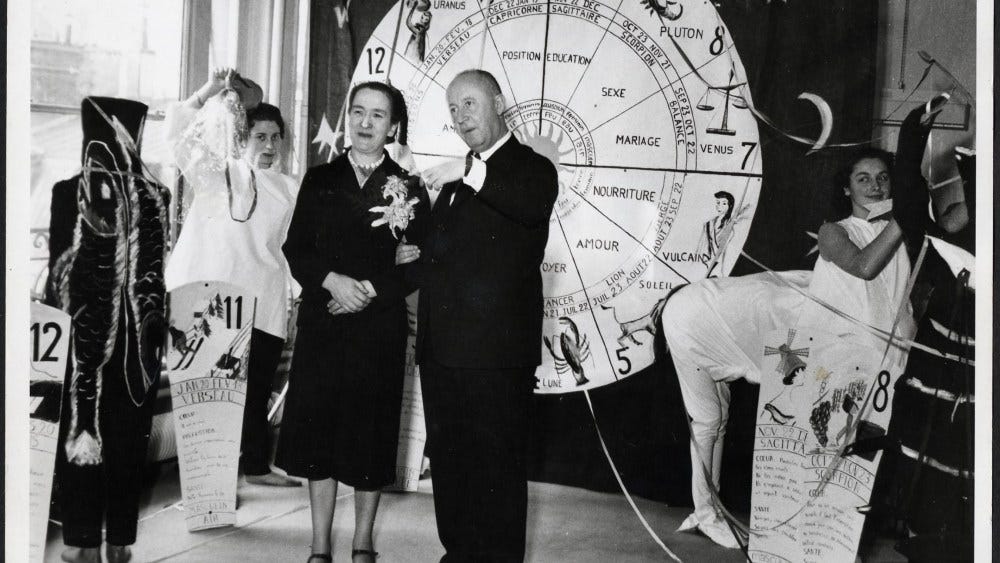
Post-army life, Dior once again designed alongside Balmain, this time for Lucien Lelong. At the time, the house of Lelong designed dresses for the wives of Nazis and other collaborators–remember, this is the 40s in Paris. In another essay, we can cover WW2 and designers, but I’m afraid if I added all the context here, you’d be reading for the next 2 hours. But what you need to know for now, is that you’ll be hard pressed to find a designer from this time period that was not in some way, responding to or involved with the war. Unfortunately, in places like occupied Paris, designing for fascist collaborators was the only way to stay in business at all. In Dior’s case, he was still an employee of Lelong in 1942. He started Dior officially in 1946, with six million francs worth of backing from industrialist Marcel Boussac and a couple of consultations from his personal clairvoyants. Yes, Christian Dior was an astrological girly pop by nature, even carrying a variety of talismans. Who needs an accountant!
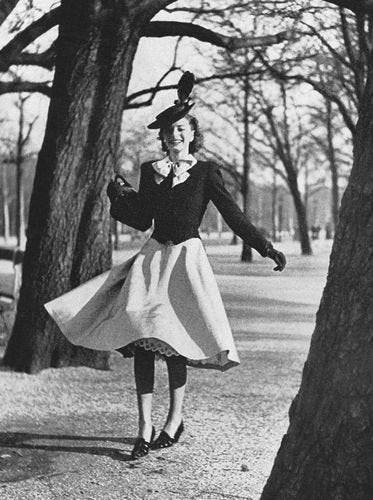
Armed with the knowledge of what I can only assume to be the divine, Dior brought his first collection to fruition in 1947. Dubbed “The New Look” by Harper’s Bazaar, this collection included culture shocking designs such as nipped-in waists, padded hips, structured bodices, and voluminous skirts that used generous amounts of fabric, which is important because at the time, wartime scarcity and ration mentality was still fresh in collective memory.
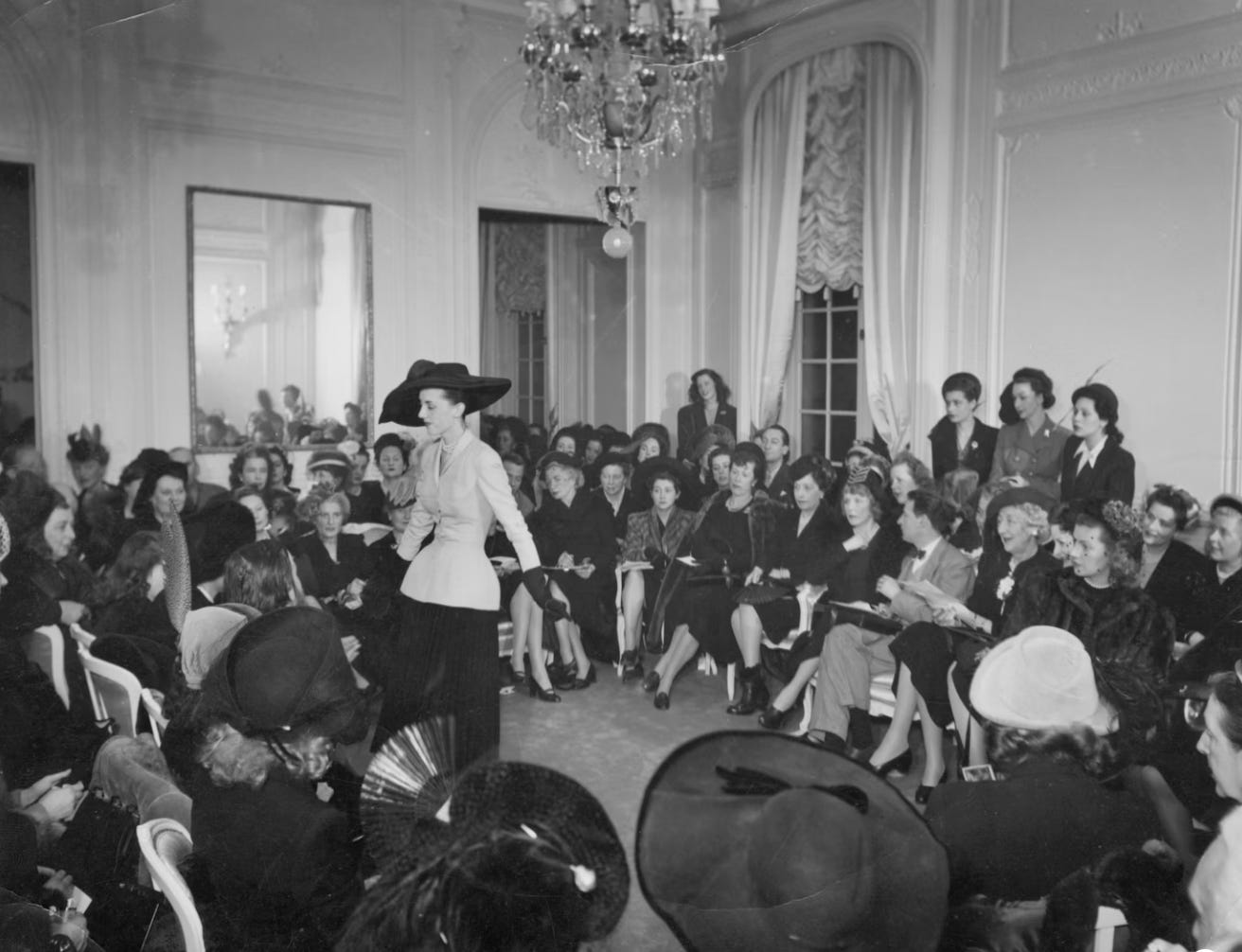
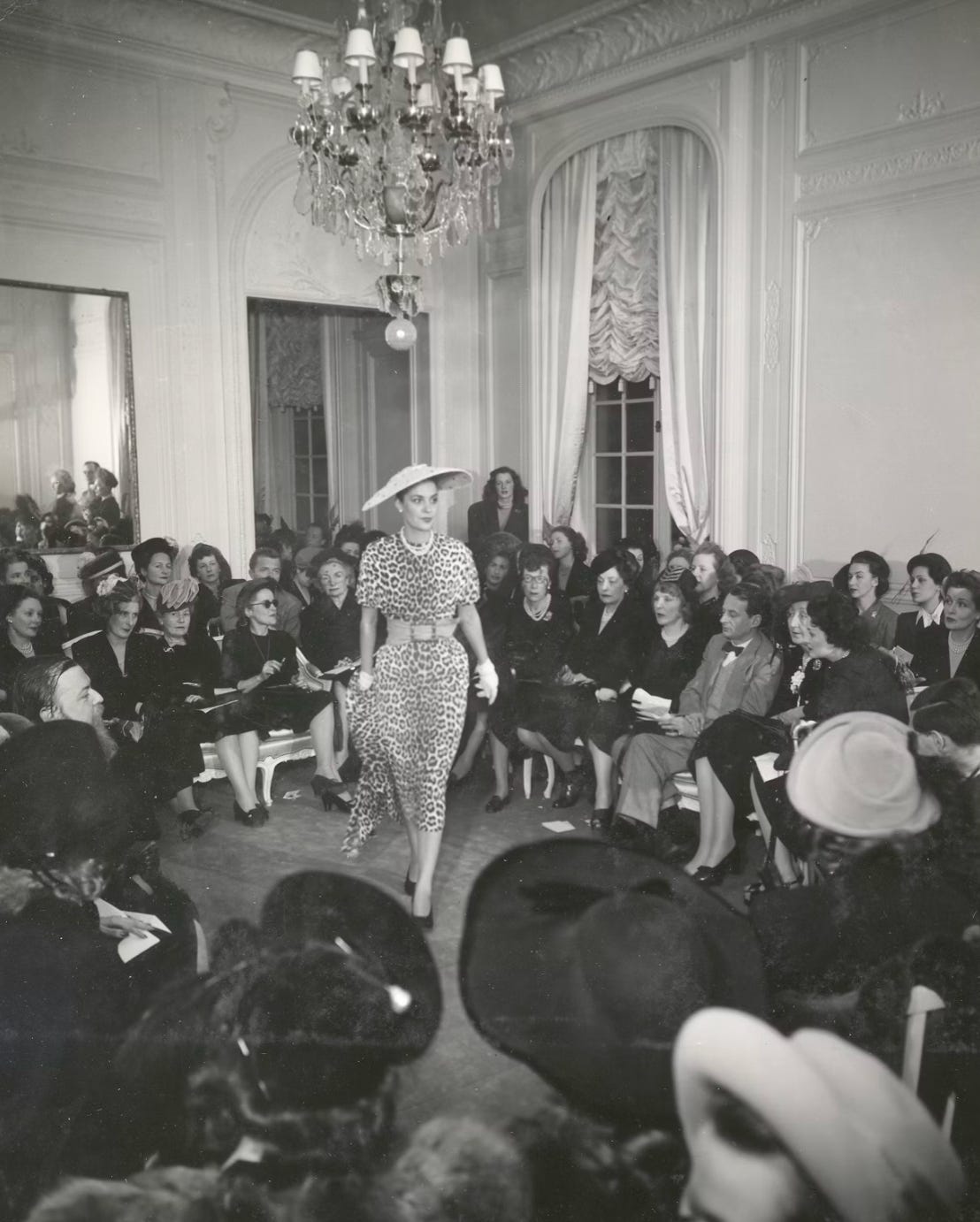
A mere ten years after launching Dior, Christian died suddenly in 1957, arguably leaving behind far more than silhouettes.

Dior’s House Codes
Dior viewed elegance as a stabilizing force and famously viewed women as “flowers”. Beauty was something to be arranged and he favored structure over ease. This shows up particularly in the way his designs created emotional reassurance when he, like society at large, was emerging from an intense trauma.
After women, flowers are the most lovely thing God has given the world.
-Christian Dior
(or something like that)
One of the most important Dior house codes is the architecture of the body itself, seen in the way Dior design garments as structures rather than just a skin. You have these big engineered skirts with super cinched waists, creating a fairy tale like silhouette for the wearer. This composition exists even when the lines themselves are loosened, the architectural shape of a body is still positioned firmly on the frontlines. Dior treated craftsmanship with a sort of seriousness, grounding things with symmetry and tailoring. It feels like a moral positioning, in a way.
On the flowers themselves, you may be tempted to assume that women as “flowers” means softness in nature. On the contrary, this is more a method of cultivation, of extreme care. All of these are bound together by the romanticism tempered by order. Even the most romantic Dior pieces are sculpted in nature, which is difficult to miss once you’ve seen it. Perhaps there’s a metaphor to be gleaned from Madeleine Dior’s seaside garden that shielded beautiful, delicate flowers from harsh winds.
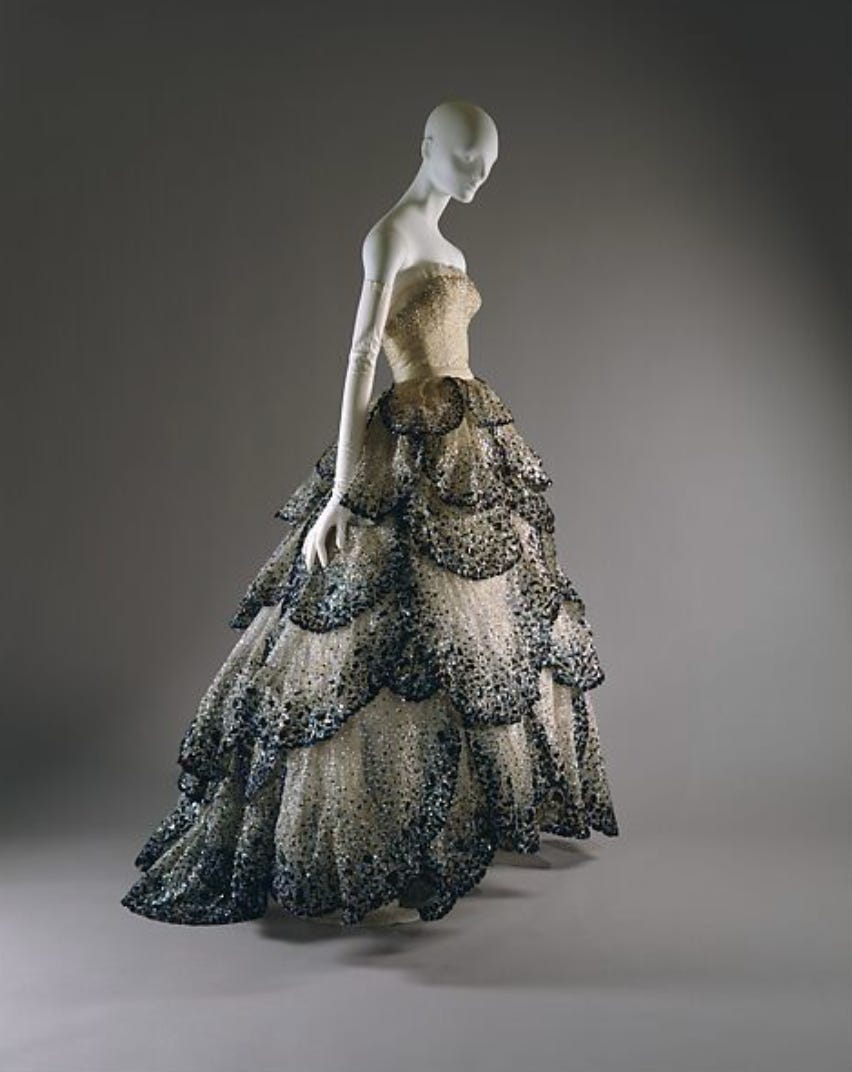
Can we all be summed up to our relationship with our mothers? If I ever figure that out myself, I will let you know. Still, Dior makes an excellent Mother’s Day gift, particularly if your mother’s name is Madeleine.
Below is Gatekept’s syllabus for this article, it includes resources and additional research on this week’s topic. If you’re a paid subscriber, peruse at your leisure. If not, consider subscribing to join in!
The Gatekeeper’s Guide to House Codes
This week’s syllabus will be a reading list full of Dior and a practical way for you to decode house codes for yourself. If you’re a history buff, I think you’ll particularly enjoy this week’s syllabus. With SS26 Fashion Weeks coming up in about a month, it’s a good idea to review your favorite houses and their successive creative director’s histories beforehand. This will help you have better conversations about runways and a broader outlook on the collections you’ll be seeing.